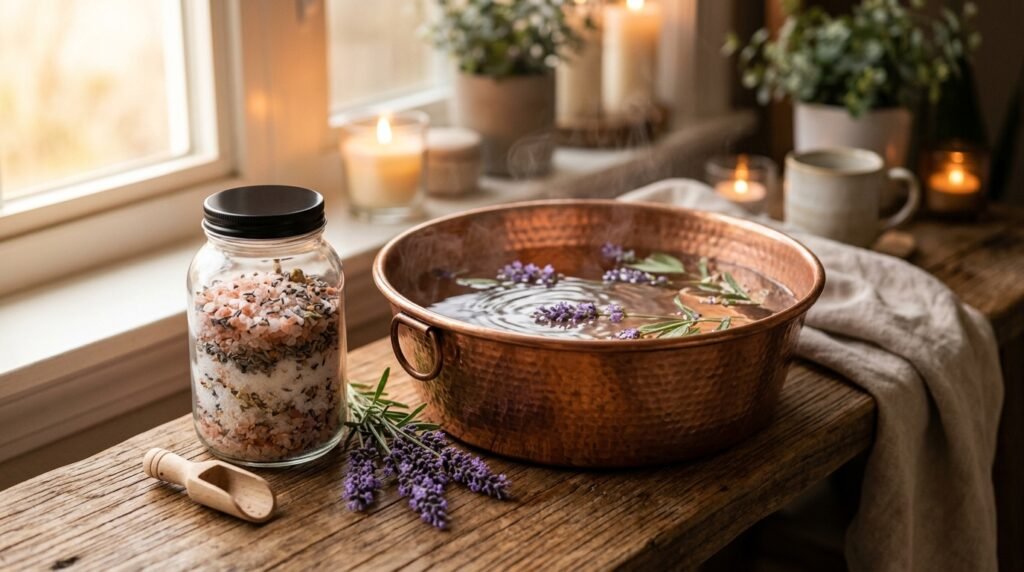
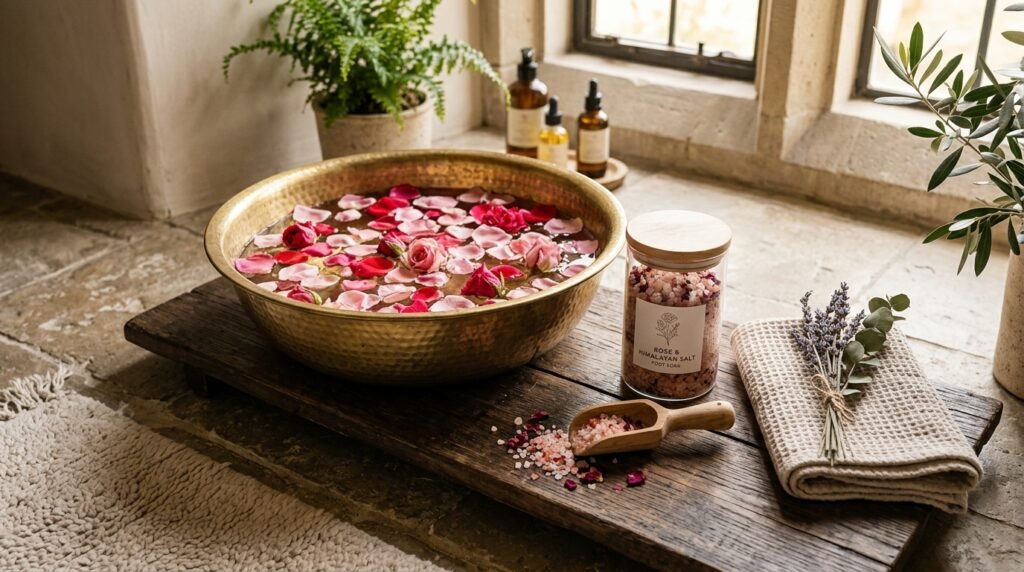
To use bath salts without a bathtub, dissolve 2 to 3 tablespoons of mineral bath salt in a standard bathroom bucket of warm water for a soothing whole-body rinse, or dissolve 2 tablespoons in a basin for a 15-minute warm foot soak. This provides full mineral absorption, muscle relaxation, and deep stress relief in any standard Indian bathroom.
For decades, Western lifestyle magazines and television commercials have propagated a misleading aesthetic: that using bath salts requires reclining in an oversized porcelain bathtub surrounded by scented candles. For the vast majority of households across India, where modern bathrooms are equipped with practical bucket-and-mug setups or standing showers, this depiction has created an unnecessary barrier.
The reality is that your body absorbs beneficial minerals through the skin regardless of whether you are submerged up to your neck or soaking your tired feet in a simple basin. In fact, targeted applications such as an evening warm foot soak or a comforting bucket bath often deliver faster, targeted relief for aching feet, swollen ankles, and daily physical fatigue than a full tub soak.
In this guide, we break down the practical methods, science-backed benefits, and everyday routines for enjoying mineral bath salts—specifically Himalayan pink rock salt and magnesium-rich Epsom salts—in any standard Indian bathroom.
Why Do Most People Think Bath Salts Require an Expensive Bathtub?
The misconception stems primarily from Western product marketing. European and American brands frequently formulate products with heavy foaming detergents meant to bubble in 150 liters of stationary tub water. Because bathtubs are uncommon in Indian metropolitan homes due to architectural layouts and water conservation, many people assume that self-care mineral rituals are not suitable for their home.
However, the real benefits of bath salts come from osmosis and transdermal mineral absorption, not the shape or style of the bathroom container.
When high-quality salts like natural Himalayan pink rock salt, USP-grade magnesium sulfate (Epsom salt), and Dead Sea minerals dissolve in warm water, they break down into bioavailable mineral ions. When your skin is exposed to this warm mineral solution, it helps ease physical tension, soften rough skin, and accelerate muscle recovery.
The Science: What Happens During a Warm Mineral Salt Soak?
Your skin functions as a porous, selective barrier. When exposed to warm water saturated with mineral salts, several natural biological processes occur:
- Capillary Vasodilation and Micro-Circulation: Warm water naturally expands constricted peripheral blood vessels. The presence of dissolved magnesium helps smooth muscle tissue, promoting localized blood circulation and easing muscle stiffness.
- Transdermal Magnesium Comfort: Magnesium plays a central role in muscle relaxation and nerve function. Soaking your feet or rinsing your body in warm magnesium-rich water provides direct, localized comfort to tired muscles without digestive upset.
- Osmotic Fluid Balance: If you experience puffy feet or swollen ankles after long commutes, standing for hours, or sitting at a desk, the gentle osmotic pull of warm salt water helps relieve fluid retention and swelling.
- Skin Softening and Exfoliation: Natural mineral salts gently slough away dead skin cells, softening rough, dry soles and callouses, making tired feet smooth and refreshed.
Natural Self-Care: Himalayan Rose Bath Salt
Experience the soothing synergy of natural Himalayan pink rock salt, USP Epsom salt, Dead Sea minerals, and pure Damask rose essential oil. TriShakti Jyotish’s
Explore our entire collection including Lavender Bath Salt and Sandalwood Bath Salt at the TriShakti Jyotish Store.